Introduction
The landscape of home coffee brewing has evolved considerably over the past two decades. Where once households typically relied on full-size drip machines that produced multiple cups at a time, today’s market reflects changing lifestyles and preferences. Single-serve brewing systems have grown increasingly popular, particularly among people living in compact spaces, those who work from home, and anyone seeking convenience without waste.
The Keurig K-Mini represents one entry point into the single-serve coffee maker category. Understanding what this appliance offers, how it functions, and whether it aligns with your household needs requires looking beyond marketing language and examining the actual capabilities and considerations involved.
This article explores the K-Mini in depth, covering its design, functionality, practical applications, and the factors worth thinking through before adding one to your kitchen.
What Is the Keurig K-Mini?
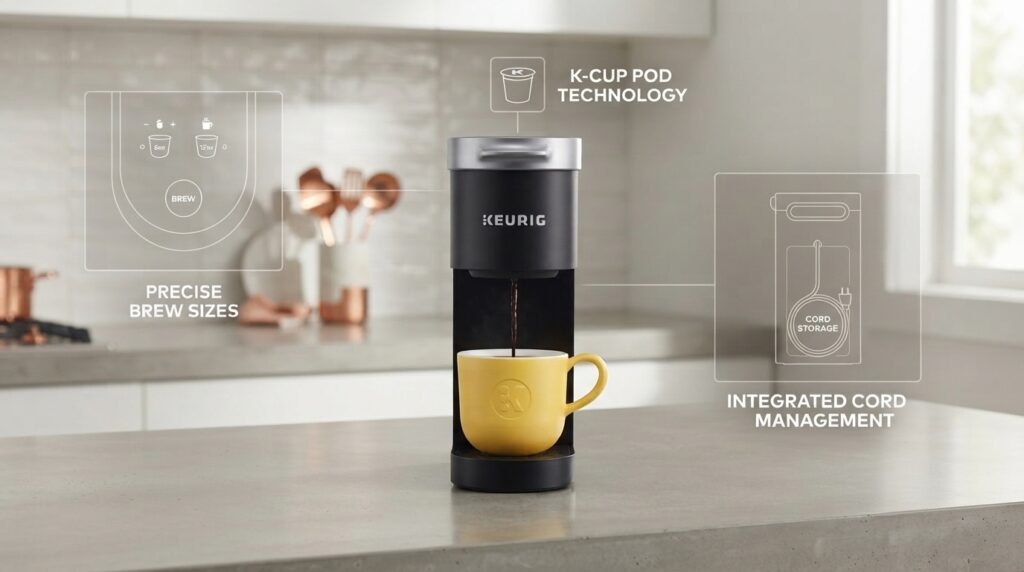
The K-Mini is a compact, pod-based coffee maker designed to brew individual servings of coffee. It operates using K-Cup pods—pre-packaged coffee grounds sealed in a plastic and foil capsule. When inserted into the machine, the pod is pierced and hot water is forced through the grounds, dispensing brewed coffee directly into your cup.
The name “K-Mini” itself signals the device’s primary selling point: size. Compared to standard full-size coffee makers, this model occupies significantly less counter space, making it a practical option for apartments, dorm rooms, office cubicles, or any situation where real estate is limited.
Key Features and Specifications
Brew Size Range
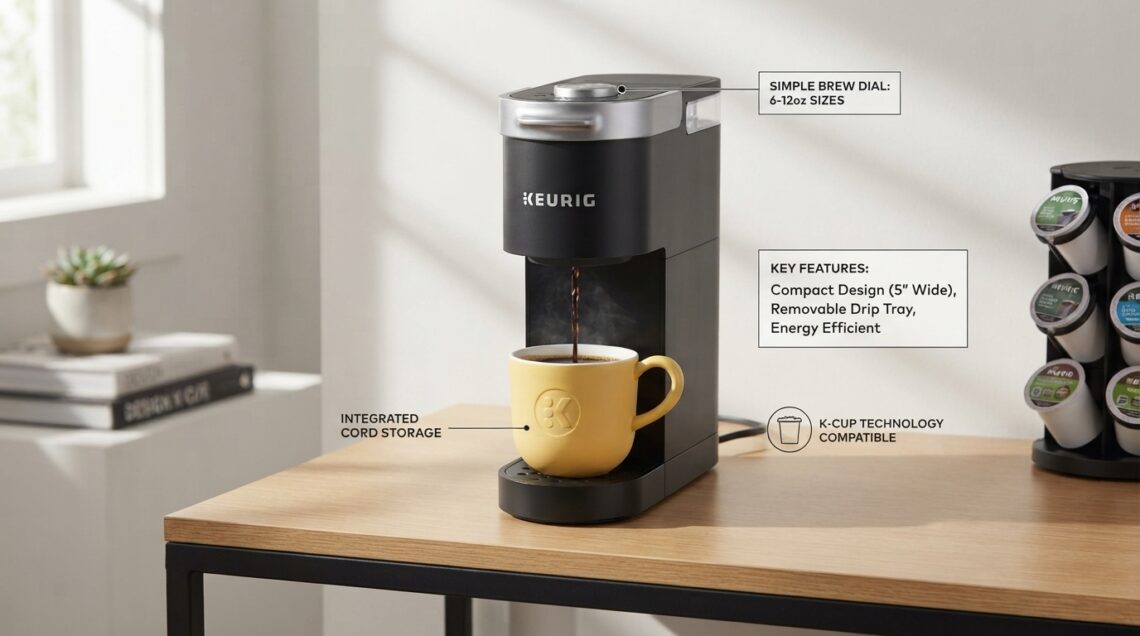
The K-Mini accommodates brew sizes between 6 and 12 ounces. This range covers typical small to medium coffee cups. The smaller 6-ounce option suits espresso-style drinks or concentrated coffee servings, while the 12-ounce setting delivers a more traditional cup. Users can adjust the desired volume before brewing begins.
Physical Design and Footprint
The unit’s compact dimensions make it notably smaller than conventional coffee makers. The design includes a removable drip tray positioned beneath the dispensing area, which catches overflow and allows for easy cleaning. The water reservoir sits at the back of the unit and has a modest capacity, requiring more frequent refilling than larger machines if multiple cups are brewed in succession.
Cord Storage Feature
An integrated cord storage mechanism allows excess cable to wind around the back or base of the unit. This practical detail helps maintain a neater appearance on crowded countertops and prevents stray power cords from becoming visual clutter or tripping hazards.
Color Options
The K-Mini is available in several colors, with black being a versatile choice that blends with most kitchen aesthetics. This neutral tone complements both modern minimalist kitchens and traditional setups.
Power and Operation
The machine operates via a standard electrical outlet. Once plugged in, a simple interface—typically involving just a few buttons—controls the brewing process. There’s no complicated programming or learning curve; you insert a pod, select your desired cup size, and press brew.
Heating and Brewing Speed
The K-Mini heats water relatively quickly, typically delivering a brewed cup within a minute or two of starting the process. This speed factor matters significantly for people rushing through morning routines or wanting immediate coffee availability.
How the K-Mini Functions
Understanding the basic operation helps clarify whether this type of machine suits your preferences.
The water reservoir must be filled with fresh water before brewing. The K-Cup pod slides into a designated slot, and the machine’s puncture mechanism pierces both the top and bottom of the pod when you close the brewer head. Pressurized hot water then forces through the grounds, and the brewed coffee flows into a waiting cup positioned on the drip tray below.
The entire process is automated once initiated. No manual pouring, timing, or technique adjustments are necessary. This simplicity appeals to people who prioritize convenience or those new to coffee making.
Practical Applications and Use Cases
Home Brewing for Single-Occupant Households
A person living alone often faces a dilemma with traditional coffee makers: brewing a full pot typically yields four to six cups, much of which may be discarded if not consumed before the coffee cools. The K-Mini addresses this by producing exactly one cup per brewing cycle. Nothing is wasted, and fresh coffee is always available on demand.
Office and Workspace Settings
Small offices, home offices, and shared workplace break rooms benefit from the K-Mini’s space efficiency. Rather than occupying valuable counter real estate with a large machine, the compact unit fits easily into tight quarters while still providing convenient coffee access for multiple people throughout the day.
Secondary Coffee Station
Some households maintain a primary coffee maker but appreciate having a backup option. The K-Mini can serve as a secondary brewing station, allowing different household members to make their preferred coffee simultaneously or enabling someone to quickly brew a cup without interfering with someone else’s brewing process.
Accommodations and Limited-Space Environments
College dorm rooms, RVs, tiny homes, and studio apartments all present scenarios where a full-size coffee maker simply won’t fit. The K-Mini’s dimensions make it suitable for these constrained environments without requiring residents to forgo coffee altogether.
Customization and Preference Accommodation
In households where coffee preferences differ—one person prefers dark roast while another likes a lighter blend—the K-Mini allows each individual to select their preferred pod variety for each brewing cycle. This flexibility eliminates compromise or the need to brew more coffee than someone will drink.
Who Might Find This Machine Suitable
The K-Mini appeals to several distinct groups, though the right machine varies based on individual circumstances and priorities.
People in compact living situations benefit most directly from the size advantage. Anyone with limited counter space will appreciate the minimal footprint.
Coffee drinkers who live alone or in very small households find the single-serve brewing capacity well-matched to their needs. There’s no pressure to consume multiple cups or waste partially-cooled coffee.
Individuals who prioritize convenience and simplicity over brewing customization appreciate the straightforward operation. Users don’t need to measure grounds, adjust water levels, or monitor brewing times.
People with unpredictable schedules who might brew coffee at different times throughout the day benefit from the on-demand nature of pod machines. There’s no need to wait for an entire pot to brew when only one cup is needed.
Those interested in coffee variety without maintaining multiple bags of different bean types can leverage the wide selection of K-Cup pods available from various roasters and brands. Trying new flavors requires only purchasing different pods rather than committing to a full bag of beans.
Important Considerations and Limitations
While the K-Mini offers genuine advantages, potential owners should also consider certain drawbacks and limitations that might affect satisfaction.
Ongoing Pod Costs
K-Cup pods typically cost more per cup than purchasing whole beans or ground coffee in bulk. Over months and years, this incremental cost difference accumulates into a meaningful expense. Households that consume significant quantities of coffee daily might find the cumulative pod costs substantial compared to traditional brewing methods.
Environmental Impact of Pods
Single-use K-Cup pods generate plastic waste. While recyclable options exist, they’re less convenient than simply composting used grounds, and not all recycling facilities accept them. Environmentally conscious consumers should weigh this factor carefully.
Limited Brewing Capacity
The machine produces one cup at a time. If multiple people need coffee simultaneously or if someone wants to brew a larger pot for entertaining, the K-Mini’s single-cup limitation becomes apparent. Brewing sequential cups takes time, and the process can’t be accelerated.
Water Reservoir Size
The relatively small reservoir means frequent refilling, particularly if multiple cups will be brewed in succession. This requires more active engagement during brewing than a full-size machine with a larger reservoir.
Pod Selection and Availability
While K-Cup variety has expanded significantly, specific preferences might not always be available in pod format. Someone seeking specialty beans from a local roaster, for instance, won’t find that option packaged as a K-Cup.
Brewing Customization
Pod machines offer limited customization compared to manual or traditional automatic brewing methods. You can’t adjust grind size, water temperature, or brewing time. The machine follows its programmed parameters regardless of your preferences.
Long-term Reliability and Repair
Like all appliances, the K-Mini can experience mechanical issues. Availability of replacement parts and repair services varies by location, and in some cases, replacement rather than repair might prove more practical.
Understanding the Single-Serve Brewing Category
The K-Mini exists within a broader landscape of single-serve brewing options, each with different philosophies and tradeoffs.
Pod-based systems like the K-Mini emphasize convenience and speed. They require minimal cleanup and produce consistent results. The tradeoff involves pod waste and higher per-cup costs.
Manual pour-over methods provide maximum brewing control and typically work with any ground coffee, but they demand more skill, attention, and time from the user.
Automatic drip machines with smaller capacities offer a middle ground, brewing multiple cups without the waste associated with larger machines, though they’re larger than the K-Mini.
Espresso machines and Moka pots deliver concentrated coffee with different flavor characteristics but require more technique and equipment.
Each approach serves different priorities. The existence of multiple options reflects the reality that no single solution optimally meets every person’s needs and preferences.
Frequently Asked Questions
How often does the machine need cleaning?
Regular cleaning maintains optimal performance. The external surfaces can be wiped with a damp cloth, and the removable drip tray should be emptied and rinsed regularly. The internal water lines may require occasional descaling using a commercial descaling solution, following the manufacturer’s instructions, to remove mineral buildup from water.
Can you use reusable K-Cups with this machine?
Many users refill reusable K-Cup alternatives with their own ground coffee. This approach can significantly reduce ongoing costs and allows use of any coffee variety. Effectiveness varies based on the specific reusable pod design and how finely the grounds are prepared.
What’s the warranty and support situation?
Keurig products typically include manufacturer warranties covering defects, though specific terms vary. Checking the official Keurig website or your product documentation provides precise information about warranty length and coverage details for your machine.
How loud is the machine during brewing?
The K-Mini operates with moderate noise levels. It’s noticeably quieter than some larger machines but not silent. If noise during early morning brewing is a significant concern, listening to a demonstration or watching video reviews can provide a sense of the actual sound level.
Does it work with all K-Cup pod varieties?
The K-Mini is compatible with standard K-Cup pods from Keurig and many third-party manufacturers. However, not all single-serve pods follow the exact K-Cup specifications. Checking pod compatibility before purchase ensures you can access the variety you prefer.
What if the machine malfunctions?
Initial troubleshooting often involves checking water levels, ensuring proper pod insertion, and cleaning the puncture needles. If problems persist, contacting Keurig’s customer support provides access to further guidance. Depending on warranty status, repairs or replacement might be available.
How much counter space does it actually require?
Exact dimensions vary, but the K-Mini typically requires roughly one square foot of counter space, comparable to a toaster or small microwave. Measuring the available space in your kitchen before purchase prevents surprises upon delivery.
Conclusion
The Keurig K-Mini occupies a specific niche in the coffee maker market. It delivers genuine value for certain situations—compact living spaces, single-person households, office environments, and anyone prioritizing convenience and simplicity over brewing customization or cost minimization.
The machine’s straightforward operation, minimal footprint, and on-demand brewing capability make it a practical choice for people with those priorities. Simultaneously, the ongoing pod costs, environmental considerations, and single-cup capacity represent legitimate limitations worth acknowledging honestly.
The right coffee maker depends entirely on individual circumstances, priorities, and preferences. For some people, the K-Mini’s advantages outweigh its limitations substantially. For others, different brewing methods might align better with their values and needs.