Introduction
The evolution of home coffee brewing has dramatically shifted the way people approach their morning routines. Where once coffee makers were one-size-fits-all machines that brewed entire pots, today’s consumers have access to a wide variety of brewing methods tailored to different lifestyles and preferences. Single-serve brewing systems have become particularly popular for households where not everyone drinks coffee at the same time, or where space is a premium concern.
The Keurig K-Mini Mate Plus represents one segment of this market: the compact single-serve brewer designed for people with limited counter space who still want quality coffee without hassle. This machine has gained attention among renters, office workers, college students, and anyone else looking for a straightforward way to make coffee without committing to a full-size appliance. Understanding what this particular model offers, along with its practical limitations, helps potential users make an informed decision about whether it fits their needs.
This guide explores the features, functionality, and realistic applications of the K-Mini Mate Plus, providing the information necessary to determine if this type of brewing system aligns with your lifestyle.
Key Features and Specifications
Compact Design and Footprint
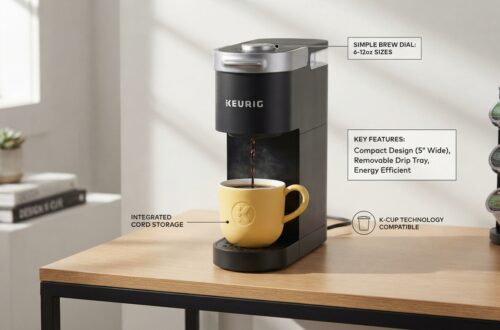
One of the defining characteristics of the K-Mini Mate Plus is its small physical footprint. Single-serve pod brewers in this class are engineered for environments where every inch of counter space matters. Whether you’re working with a studio apartment, a small office break room, or a dorm room, a machine that occupies roughly the same amount of space as a toaster offers practical advantages over traditional drip coffee makers.
The matte black finish provides a neutral aesthetic that blends relatively easily with different kitchen styles and decor preferences. Matte surfaces, unlike glossy finishes, tend to show fingerprints less noticeably, which can be a practical benefit in a kitchen environment where the machine gets frequent use.
Brewing Capacity and Reservoir
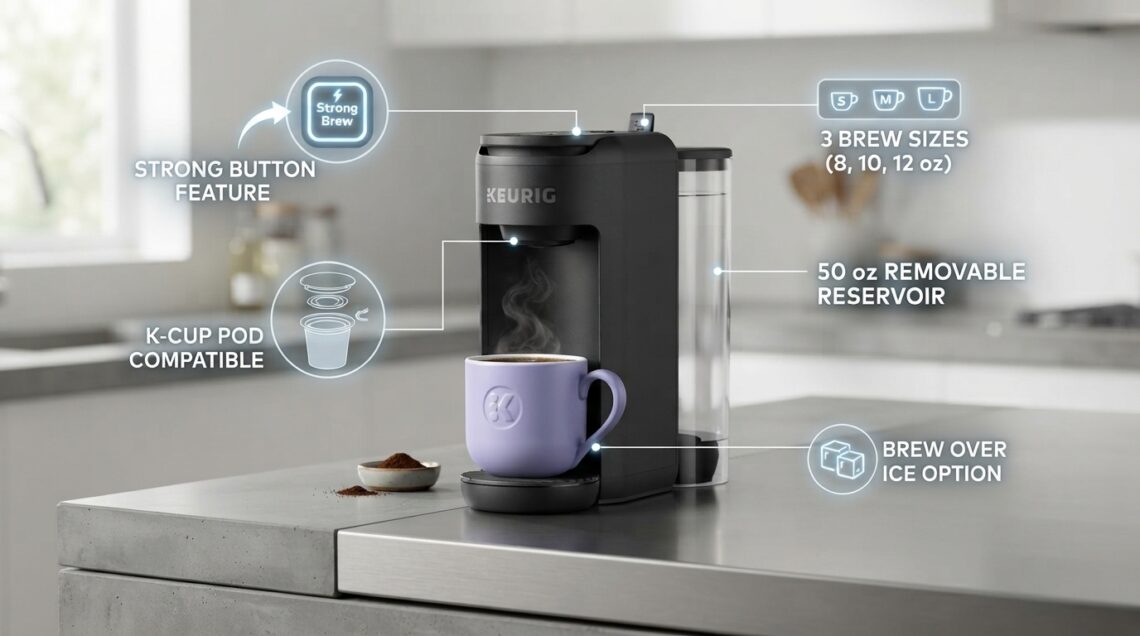
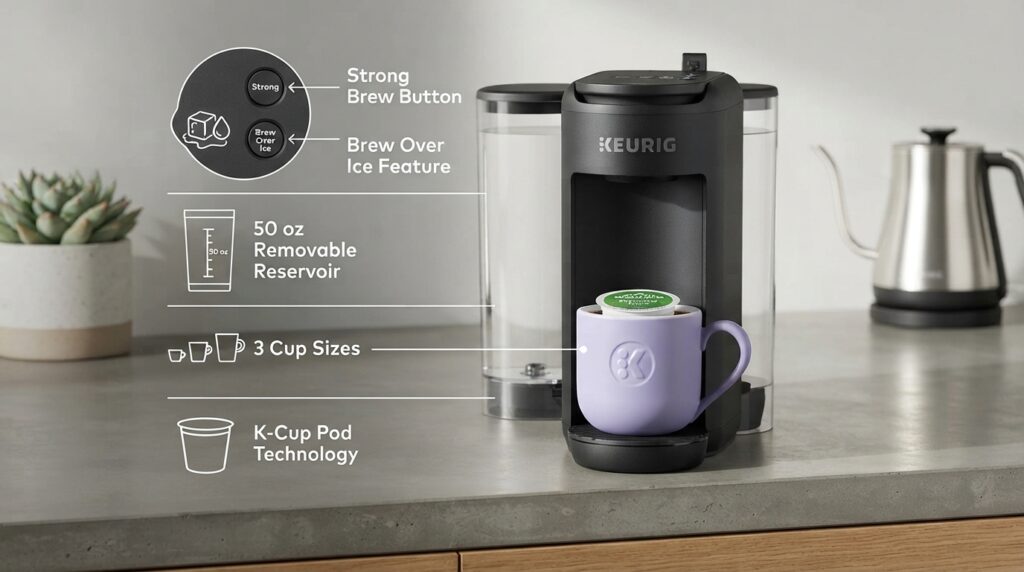
The 50-ounce removable reservoir represents a practical middle ground for this machine’s class. A larger reservoir means less frequent refilling, while the removable design simplifies the cleaning and maintenance process. For someone making one or two cups daily, a 50-ounce capacity typically means refilling the reservoir every few days rather than daily, depending on individual usage patterns.
Multiple Cup Size Options
The machine offers three different brewing sizes, which addresses the reality that coffee drinkers have different preferences. Some people prefer a concentrated, smaller cup of strong coffee, while others want a larger volume for their morning routine. Having three distinct options accommodates these different preferences without requiring multiple machines or complicated adjustments.
Brew Over Ice Functionality
The dedicated “Brew Over Ice” feature is specifically designed for hot coffee dispensed directly over ice, which creates a different drinking experience than simply pouring regular coffee over ice after brewing. When hot coffee drips directly onto ice, the cooling process happens more rapidly and evenly, which some coffee enthusiasts argue produces a better flavor profile than allowing brewed coffee to cool gradually.
Strong Brew Button
A dedicated strong brew setting allows users to concentrate the flavor of their coffee by adjusting the brewing process. This feature is useful for people who prefer a more robust taste or who find standard brewing strength doesn’t meet their preferences. The mechanism typically works by adjusting contact time between water and grounds, or by modifying water temperature or flow rate.
Understanding Single-Serve Pod Brewing Systems
How K-Cup Pod Systems Work
K-Cup technology operates on a relatively straightforward principle. A pre-packaged pod containing ground coffee is inserted into the machine, hot water is forced through the pod at pressure, and brewed coffee is dispensed into your cup. The entire process typically takes just a few minutes from start to finish, with most brewing cycles completing in under two minutes.
The standardized nature of K-Cup pods means that compatibility is relatively consistent across machines that use this system. However, not all single-serve machines accept K-Cups, so understanding what type of pods your machine uses is essential before purchasing.
Pod Disposal and Environmental Considerations
One aspect of pod-based brewing that warrants discussion is waste management. Each individual pod represents one serving, and once used, the pod must be disposed of. For environmentally conscious consumers, this disposability factor may be a consideration. Some users address this concern by using refillable K-Cup alternatives, which allow you to fill your own pods with grounds from bulk coffee, reducing packaging waste.
The removed grounds can typically be composted or disposed of with regular waste, depending on your local waste management system and whether the pod is made from compostable materials.
Practical Applications and Usage Scenarios
The Weekday Morning Routine
For individuals with busy weekday mornings, a compact single-serve brewer offers speed and simplicity. There’s minimal setup required beyond filling the reservoir, inserting a pod, and pressing a button. This efficiency can be particularly valuable for people commuting to work or managing multiple morning responsibilities.
The three cup size options accommodate different approaches to morning coffee consumption. Someone rushing out the door might choose a smaller, concentrated cup, while someone working from home might prefer a larger 12-ounce option that lasts through the first hour of their day.
Office or Shared Workspace Environments
In office settings where multiple people share kitchen facilities, single-serve brewers eliminate the common problem of leftover coffee sitting in a carafe or inconsistency about who makes the next pot. Each person makes their own serving, reducing conflict and ensuring fresh coffee for everyone.
The compact footprint makes the K-Mini Mate Plus suitable for break rooms with limited space, smaller offices, or even shared kitchen facilities in co-working spaces.
Guest Accommodations
If you regularly have overnight guests, a single-serve brewer allows each person to make coffee to their preferences without creating a large pot that might go unused. Guests can select their preferred pod type and cup size, personalizing their coffee experience.
Limited Kitchen Space Situations
Anyone living in a space where kitchen counter area is precious real estate—rentals, small apartments, studio spaces, or RVs—can find value in a machine that serves a specific function without consuming the space that a traditional coffee maker would require.
Who May Find This Machine Suitable
Individual Coffee Drinkers
People living alone or in households where only one person drinks coffee often have no practical use for a standard coffee maker that brews six to twelve cups. A single-serve machine eliminates waste while providing fresh coffee exactly when needed.
People with Multiple Coffee Preferences
Households with people who have different coffee preferences—some preferring strong dark roasts, others preferring lighter blends, some wanting decaf, others wanting regular—benefit from the flexibility that pod brewing offers. Everyone can make their preferred style without compromise.
Those with Limited Counter Space
Renters, people in small living spaces, or anyone with a compact kitchen can appreciate an appliance that delivers functionality without requiring substantial space.
Convenience-Focused Users
Individuals who prioritize speed and simplicity in their morning routine, and who don’t find preparation ritual to be an important part of their coffee experience, generally align well with pod-based brewing.
Important Considerations and Limitations
Pod Availability and Selection
The utility of any K-Cup compatible machine depends on the availability of pods you enjoy. While K-Cup pods are widely available in most supermarkets, selection varies by location and retail outlet. Online shopping can expand your options, but this means planning ahead rather than grabbing coffee while shopping for groceries.
Some specialty coffee roasters and smaller producers don’t offer K-Cup pods, which means your choices are limited to larger commercial brands unless you use refillable pods with coffee from other sources.
Cost Per Serving
Single-serve pods generally carry a higher per-cup cost than brewing from bulk coffee grounds. For someone making multiple cups daily, this difference becomes meaningful over time. However, the actual cost depends on which pods you purchase and where, as pricing varies significantly.
Maintenance Requirements
Like all coffee makers, the K-Mini Mate Plus requires regular cleaning to function optimally and maintain the quality of brewed coffee. The removable reservoir simplifies this process, but the machine still needs periodic descaling to remove mineral buildup from tap water. Descaling procedures typically involve running a descaling solution through the machine, which requires specific descaling products and adds to the ongoing cost of ownership.
Brewing Consistency and Customization Limitations
Pod-based brewing offers less control than manual brewing methods. You cannot adjust grind size, water temperature, or brew time beyond the preset options the machine provides. For coffee enthusiasts who enjoy precise control over their brewing parameters, this limitation may be frustrating.
Noise Levels
Single-serve pod brewers typically generate noise during operation. The pumping sounds and water flow can be louder than some expect, which may be a consideration if you’re brewing early in the morning when others are still sleeping or if you work in a quiet office environment.
Single-Serve Pod Systems Compared to Other Brewing Methods
Pod Brewing Versus Drip Coffee Makers
Traditional drip coffee makers brew larger volumes, making them economical for households where multiple people drink coffee regularly. They generally cost less upfront and have lower per-cup costs if you drink several cups daily. However, they require more counter space and produce coffee that degrades in flavor if left sitting on a warming plate.
Pod brewing produces individual servings, reducing waste and ensuring freshness with each brewing cycle, but at a higher per-unit cost.
Pod Brewing Versus Manual Brewing Methods
Methods like pour-over, French press, or Turkish coffee brewing offer more control and often produce coffee that some aficionados consider superior. These methods also don’t generate packaging waste. However, they require more active participation in the brewing process and demand specific technique and equipment knowledge.
Pod Brewing Versus Espresso Machines
Espresso machines and super-automatic machines can produce specialty drinks like cappuccinos and lattes that K-Cup systems cannot. However, they typically cost significantly more, require more space, and demand more maintenance and cleaning.
Frequently Asked Questions
How Often Should I Descale the Machine?
Most manufacturers recommend descaling every three to six months for machines used with filtered water, or every one to two months for machines using unfiltered tap water. The mineral content of your local water supply determines the necessary frequency. Regular descaling maintains optimal brewing temperature and ensures the machine functions properly.
Can I Use Off-Brand K-Cup Pods?
Yes. The K-Cup standard has been widely adopted, and many third-party manufacturers produce compatible pods. Selection includes various coffee brands, tea options, and specialty beverages. Compatibility is generally reliable, though some users report occasional jamming with certain pod brands, so selecting pods from established manufacturers tends to reduce potential issues.
What If I Want to Use Reusable Pods?
Reusable K-Cup pod alternatives are available from various manufacturers. These metal or plastic pods allow you to fill them with your own ground coffee, eliminating packaging waste and often reducing per-serving costs. Reusable pods require more cleanup than disposable pods, but they represent a practical option for environmentally conscious consumers or those seeking cost savings over time.
Does the Machine Require a Filter for the Reservoir?
The instruction manual for your specific model clarifies whether internal filtration is included or recommended. Using filtered water or installing a filter on the machine can reduce mineral buildup and extend the machine’s lifespan, particularly in areas with hard water.
How Long Does a Typical Brewing Cycle Take?
Most K-Cup machines, including this model, complete a brewing cycle in one to three minutes, depending on the cup size selected. This includes heating time if the machine has been idle, plus actual brewing time.
Is the Machine Suitable for Travel or RV Use?
The compact size makes it portable, but practical considerations apply. The machine requires electricity and access to water, so it’s suitable for RVs with power hookups or travel to locations where you can reliably access electricity. The 50-ounce reservoir size is reasonable for travel scenarios where you might make one or two servings daily.
What’s the Typical Lifespan of This Type of Machine?
Properly maintained single-serve pod brewers typically last several years. Regular descaling and basic cleaning significantly influence longevity. The actual lifespan varies based on usage frequency and water quality in your area.
Conclusion
The Keurig K-Mini Mate Plus addresses a specific need in the market for people seeking straightforward, space-efficient single-serve coffee brewing. Its compact design, multiple cup size options, and simplified operation align well with certain lifestyle patterns and living situations. The addition of over-ice brewing and strong brew settings provides flexibility for different coffee preferences.
Like any single-serve pod brewing system, the K-Mini Mate Plus involves trade-offs. Convenience and individual customization come at the expense of higher per-cup costs and ongoing pod consumption. The machine requires regular maintenance to function optimally and maintains inherent limitations compared to manual brewing methods or more feature-rich systems.
Whether this machine suits your needs depends on your living space, daily coffee consumption patterns, preference for convenience over cost, and environmental considerations regarding pod waste. For people in studio apartments, individuals living alone, or anyone prioritizing morning simplicity over brewing ritual, a compact single-serve pod brewer represents a practical choice.