Introduction
The single-serve coffee maker market has evolved considerably over the past decade. What started as a convenient option for busy mornings has matured into a category with multiple approaches to brewing speed, customization, and water temperature control. The Keurig K-Supreme represents one of the newer entries in Keurig’s lineup, and it brings several technical innovations that distinguish it from earlier models in the brand’s portfolio.
If you’re considering a single-serve coffee system, understanding how different models work and what features actually matter for your daily routine can make the difference between a satisfying purchase and one that collects dust on your counter. This guide explores what the K-Supreme offers, who might find it useful, and what realistic expectations should be when using this type of brewing system.
Key Features Explained
MultiStream Technology
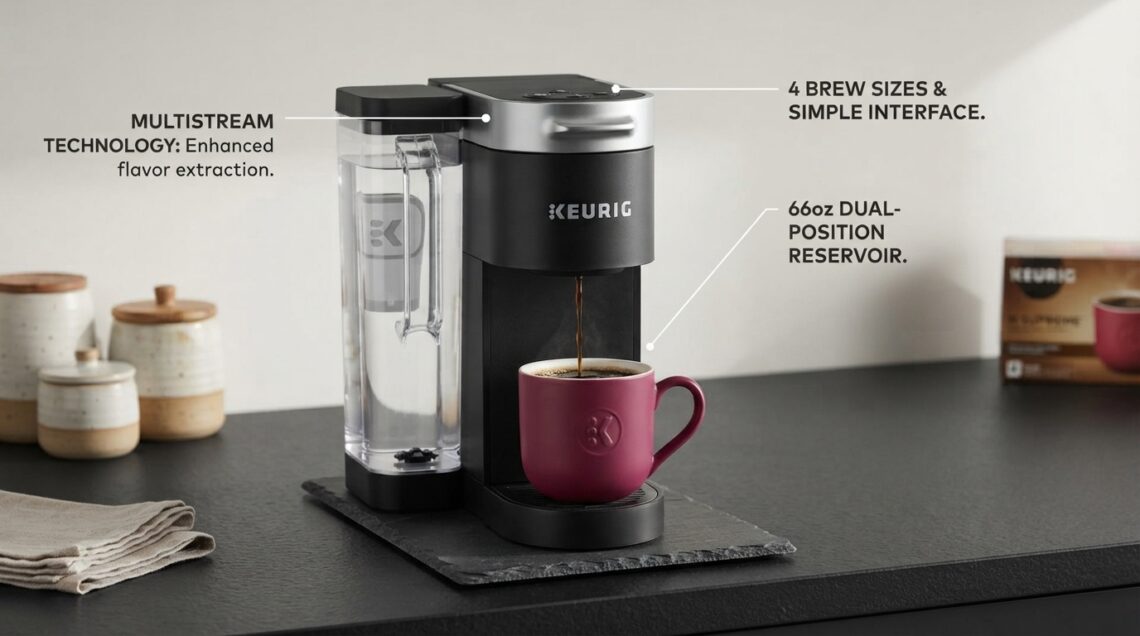
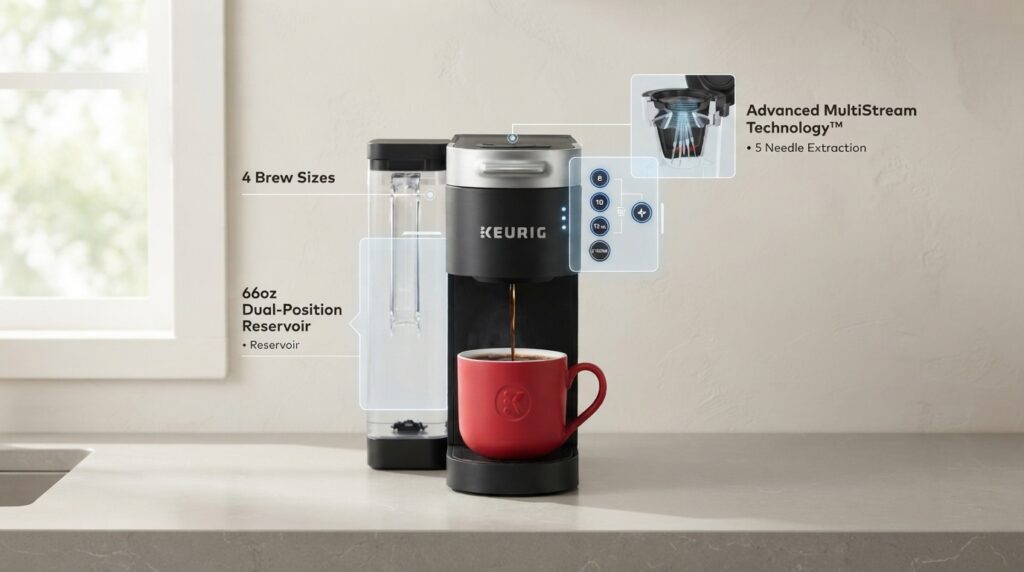
The most distinctive feature of the K-Supreme is its MultiStream technology, which represents Keurig’s approach to improving water distribution during the brewing process. Traditional single-serve pod brewers typically release water in a single stream onto the coffee grounds. MultiStream disperses water across multiple points within the K-Cup pod holder, theoretically promoting more even saturation and extraction.
In practical terms, this means water reaches different portions of the grounds more uniformly throughout the brewing cycle. The relevance of this depends on your existing experience with single-serve machines. If you’ve used Keurig machines before, you might have noticed variations in taste from pod to pod or cup to cup, sometimes resulting from uneven water contact with grounds. The MultiStream approach attempts to minimize this inconsistency.
The engineering behind this feature involves modifying the water delivery mechanism beneath the machine’s brew head. Rather than concentrating all water flow at one location, the system introduces water at several points. This is particularly relevant when brewing at larger sizes, where more water needs to make effective contact with the grounds.
Brew Size Flexibility
The K-Supreme offers four distinct brew sizes, which provides meaningful flexibility for different beverages and drinking occasions. These typically include options for smaller, concentrated brews suitable for espresso-style drinks, standard cup sizes around 8 ounces for regular coffee consumption, and larger options that can accommodate travel mugs or fill multiple cups.
Having multiple size options matters because it affects strength, brewing time, and ultimately, how satisfying the result feels. Someone preparing coffee for just themselves might prefer the smaller sizes, while someone hosting guests or working from home might appreciate the larger options. The ability to adjust brew size also means you’re not forced to use a one-size-fits-all approach when your needs vary throughout the week.
The 66-Ounce Removable Reservoir
Water reservoir capacity often goes overlooked when people evaluate coffee makers, but it significantly impacts the user experience. The 66-ounce capacity means you can brew multiple cups before needing to refill, reducing the frequency of water maintenance during your week.
The dual-position design adds practical value beyond mere capacity. A removable reservoir that can be positioned in different locations offers flexibility in how you arrange your machine on your counter or table. Some people prefer removing the reservoir entirely to fill it at the sink, while others appreciate being able to access it without moving the machine. The dual-position feature suggests the design anticipates different kitchen configurations and user preferences.
Reservoir quality also matters. Materials can affect water temperature maintenance and how easily mineral deposits accumulate over time. The specifics of the K-Supreme’s reservoir construction would be worth verifying based on the product documentation, as this influences long-term maintenance requirements.
How the K-Supreme Fits Into Daily Coffee Routines
Morning Preparation
The primary use case for single-serve machines is morning coffee preparation. Unlike traditional drip coffee makers that might brew an entire pot, single-serve systems focus on preparing one serving at a time. For households where people have different schedules or drink preferences, this eliminates the need for someone to brew coffee for the whole house or waste brewed coffee that sits in a carafe.
The speed of single-serve brewing makes it practical for mornings when you’re short on time. Water heating and brewing time varies depending on the model and brew size, but generally completes in a matter of minutes rather than the 5-10 minutes a traditional coffee maker might require.
Flexible Beverage Options
Beyond standard coffee, K-Cup compatible systems can work with various pod types. Espresso pods, tea pods, hot chocolate pods, and specialty coffee blends all fit into the same brewing chamber. This versatility means a single machine can serve multiple beverage preferences within a household, or allow one person to enjoy different types of drinks on different days without requiring additional equipment.
The brew size options become particularly useful here. Someone might brew an 8-ounce cup for morning coffee, then use a smaller size later in the day to prepare an espresso-style shot as a base for a latte or cappuccino using heated milk from another source.
Work-from-Home Considerations
For anyone spending extended time at home, particularly those working from home, a single-serve system provides convenient access to hot beverages throughout the day. Unlike a traditional coffee maker that requires planning ahead, a pod-based system lets you brew a fresh cup whenever you want one, without the commitment of brewing an entire pot.
Entertaining and Hospitality
While not the primary use case for most single-serve machines, they can play a supporting role when hosting. Guests with different beverage preferences can each get their preferred drink quickly and easily. Someone who doesn’t drink coffee but wants tea, or prefers a specific coffee preparation, can find compatible pods.
Who Might Find This Machine Suitable
Single-Person or Couple Households
People living alone or as couples often find single-serve systems most convenient. Without needing to accommodate a larger household’s varied schedules and preferences, the ability to brew just what you need becomes a genuine advantage. The machine takes up less counter space than a large traditional brewer and uses less energy per serving.
Households with Varying Preferences
Families or shared living situations where people prefer different beverages benefit from the flexibility of pod-based systems. Someone can brew their preferred coffee while a roommate or partner opts for tea, chocolate, or a different coffee variety, all without requiring multiple machines or significant planning.
Convenience-Focused Users
People who value convenience and consistency may appreciate the straightforward process: insert pod, select size, press brew, collect beverage. The minimal learning curve and predictable results appeal to those who want coffee preparation to be simple rather than a hobby or point of focus.
Those Seeking Customization Without Complexity
While the K-Supreme isn’t for people looking to fine-tune every aspect of extraction and temperature, it does offer more customization options than basic pod machines. The four brew sizes and multiple pod variety allow for meaningful personalization without requiring the knowledge or equipment that manual brewing methods demand.
People With Counter Space Constraints
A single-serve machine typically occupies less counter real estate than traditional drip brewers, making it appealing for apartment dwellers, office settings, or anyone with limited kitchen counter space. The 66-ounce reservoir reduces how often you need to refill, adding to the practical appeal for space-conscious environments.
Important Considerations Before Purchasing
Pod Availability and Variety
Single-serve pod systems depend on a supply chain of compatible pods. While K-Cup compatibility has become quite widespread, availability varies by location. If you live somewhere with limited access to specialty coffee shops or multiple grocery stores, your pod options might be more limited. Understanding what’s available in your area before investing in the machine makes sense.
Additionally, consider the types of pods you’d actually want to use. Different coffee qualities, roasts, and specialty beverages come in pod form, but the selection might not match what you’d buy if purchasing whole beans or traditional bags of ground coffee.
Environmental Impact
Single-use pods generate waste that includes plastic, aluminum, or paper, depending on the pod composition. While some pods are compostable or recyclable, this typically requires specific disposal methods that might not be available in your community. The environmental footprint of pod-based systems differs meaningfully from traditional methods or reusable pod alternatives.
Some people address this by using refillable pods or alternative brewing methods, which changes the convenience equation significantly. Assessing your comfort level with waste generation and whether you’d pursue alternatives is worth considering upfront.
Machine Maintenance Requirements
Like any coffee maker, the K-Supreme requires regular cleaning and periodic descaling to prevent mineral buildup and maintain optimal function. The descaling process removes calcium deposits that accumulate from water minerals over time. Frequency depends on your water hardness; areas with harder water require more frequent descaling.
Understanding the specific maintenance requirements and whether you’ll consistently perform them is important. Neglected maintenance can affect brewing quality and potentially reduce machine lifespan.
Learning the System
While single-serve machines are generally straightforward, mastering the K-Supreme’s specific features and understanding how to optimize results for different brew sizes and pod types does involve a brief learning curve. Most people become proficient quickly, but expecting perfect results immediately with every pod variety isn’t realistic.
Storage of Pods
Maintaining a supply of K-Cup pods requires storage space. Depending on how many different varieties you want to have on hand, this could mean storing boxes or individual pods. For apartment dwellers or anyone with limited storage, this practical consideration deserves thought.
Single-Serve Brewing Systems: A Broader Context
To understand where the K-Supreme fits, it helps to understand the landscape of available brewing approaches. Single-serve systems occupy a specific niche between convenience and control, and understanding the trade-offs clarifies whether this category suits you.
Pod-Based Systems
Pod-based machines, whether using proprietary pods or K-Cups, prioritize speed and consistency. You insert a pre-measured pod, select a size, and the machine handles the rest. The appeal is minimal setup and cleanup, plus predictable results. The trade-off is higher cost per serving compared to buying bulk coffee, environmental considerations, and less control over brewing parameters.
Pour-Over and Manual Methods
Traditional brewing methods like pour-overs or French press require active participation and more equipment, but offer significantly greater control over water temperature, contact time, and extraction. They appeal to coffee enthusiasts who enjoy the process itself. The downside is they require more time, attention, and equipment.
Drip Coffee Makers
Standard drip machines represent the middle ground for many households. They brew larger quantities, which suits households where multiple people drink coffee within a similar timeframe. They’re simple to use, require minimal counter space compared to some alternatives, and have relatively low cost. The downside is less flexibility for varying preferences and waste if brewed coffee sits too long.
Espresso Machines
True espresso requires specialized equipment and technique. These machines appeal to people who want café-quality results and are willing to invest time and money in the craft. The learning curve is steep, but the payoff for enthusiasts is significant.
The K-Supreme occupies the convenience-focused space of this spectrum, offering more consistency and speed than manual brewing, more flexibility than basic drip machines, and less setup than true espresso equipment.
Frequently Asked Questions
How long does a brewing cycle actually take?
Brewing time varies depending on brew size and whether the machine was recently used or has been idle. Generally, expect 1-2 minutes from the moment you press brew until the beverage starts dispensing. Preheating time adds to this if the machine hasn’t been used recently, potentially bringing total time to 3-4 minutes.
Does water quality affect the results?
Yes, significantly. Water hardness, mineral content, and temperature all influence how extraction occurs. Harder water can reduce machine efficiency and affect taste. Many people find using filtered water produces better results than tap water directly, though this varies by location.
Can you use reusable pods instead of disposable ones?
Some people use third-party reusable pods filled with their own ground coffee. These require more cleaning and attention than disposable pods and results can vary based on how you fill and tamp the grounds. This option bridges some convenience-versus-control considerations, but requires experimentation to optimize.
What pod varieties are actually available?
K-Cup compatibility has become quite broad. Standard coffee in various roasts dominates availability, but tea, hot chocolate, and specialty beverages are increasingly common. Smaller specialty coffee roasters sometimes offer K-Cup versions. Availability in your location worth confirming before purchasing.
How often does descaling need to happen?
In areas with hard water, descaling might be needed every 3-6 months. In areas with soft water, it might only be necessary annually or less frequently. The machine typically provides indicators when descaling is needed. Using filtered water reduces frequency somewhat.
What’s the difference between K-Supreme and other K models?
The key differentiators for K-Supreme are the MultiStream technology for water distribution and the dual-position removable reservoir. Other current models might have single-stream water delivery, different reservoir configurations, or fewer brew size options. The specific feature set varies by model.
Can the machine brew other pod formats?
K-Supreme specifically uses K-Cup pods. Other machines use different pod systems. Understanding which pods work with your specific machine prevents purchasing incompatible products.
What happens if a pod is defective or doesn’t brew properly?
Most manufacturers stand behind their products with warranties covering defective machines. Pod manufacturers typically guarantee their products work correctly. If something brews incorrectly, it’s usually traceable to either a defective machine or pod, or the pod not being inserted correctly.
Conclusion
The Keurig K-Supreme represents a thoughtfully engineered entry in the single-serve coffee market, incorporating features designed to improve consistency and user flexibility. The MultiStream technology addresses a real limitation in earlier single-serve systems—uneven water distribution—while the four brew sizes and substantial water reservoir provide practical daily-use benefits.
Whether this particular machine aligns with your needs depends on your priorities and circumstances. If you value speed, convenience, and flexibility across multiple beverage preferences, and you’re comfortable with pod-based coffee consumption and its associated considerations, the K-Supreme offers a capable solution. If you prioritize cost efficiency, environmental impact, or extensive control over brewing parameters, other approaches might serve you better.
The key to satisfaction with any single-serve system involves realistic expectations about what the technology can and cannot do, understanding the practical implications of pod-based brewing, and ensuring the specific features offered address your actual use case rather than aspirational preferences.