Introduction
The way people approach their morning coffee routine has shifted considerably over the past decade. Where once the standard drip coffee maker dominated kitchens across the country, a new category of brewing appliances has become increasingly common: single-serve pod coffee makers. These devices promise convenience and speed, brewing individual cups without the commitment of a full pot. Among the various options available, the Keurig K-Compact represents one entry point into this market.
If you’re considering whether a single-serve pod brewer might work for your household, it’s worth understanding what these machines actually deliver—and what they don’t. This article explores the Keurig K-Compact in detail, examining its features, practical applications, and the specific situations where this type of appliance tends to serve people well.
Key Features of the K-Compact Model
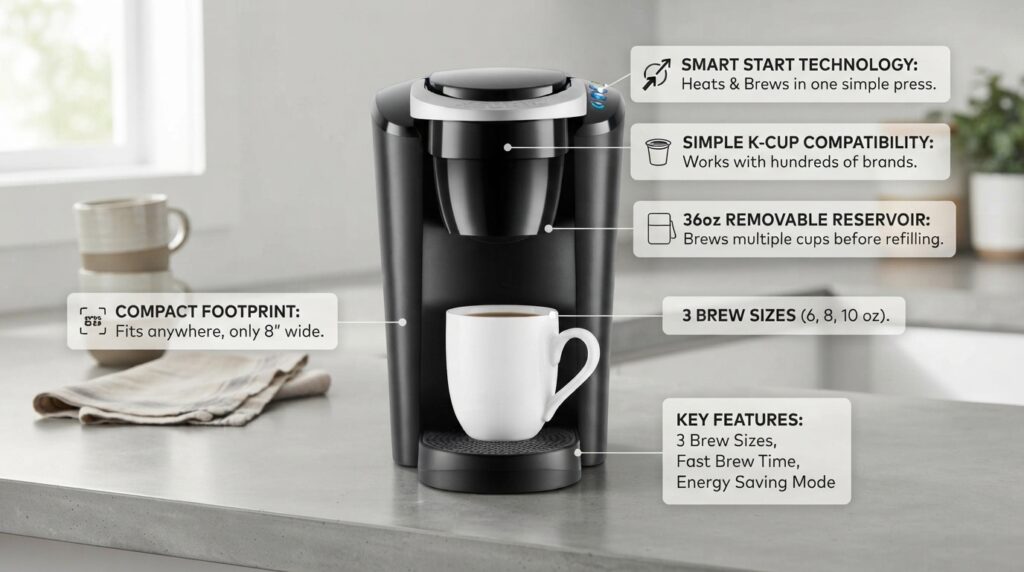
The Keurig K-Compact includes several features that define its category. Understanding what each one does—and why it matters—can help you decide whether this particular machine aligns with how you actually brew coffee.
Three Brew Size Options
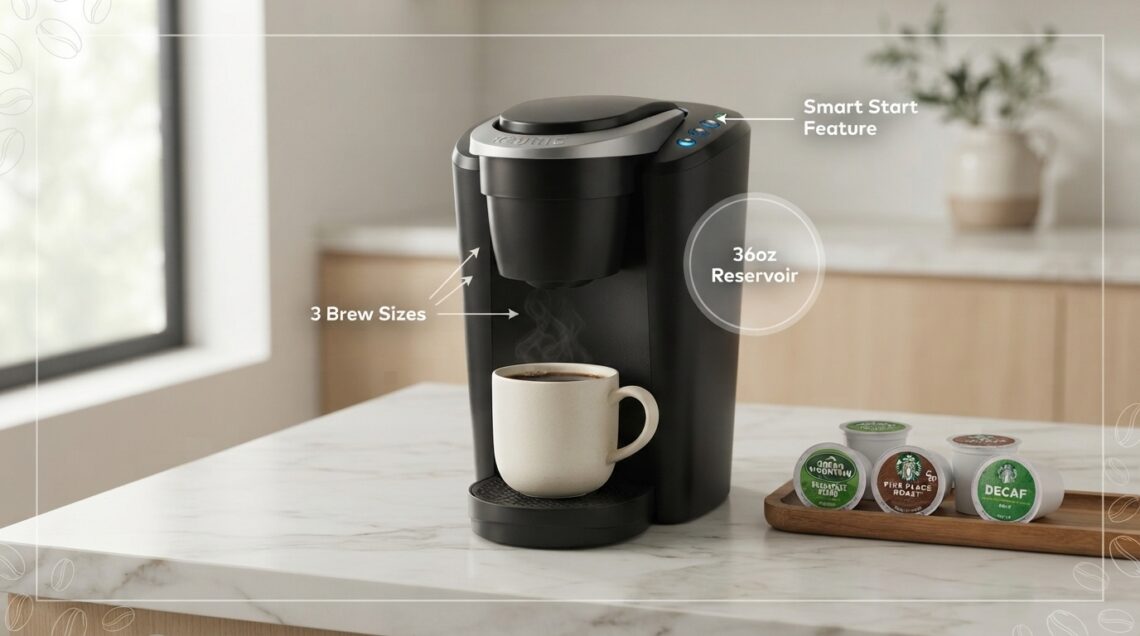
The machine offers three different cup sizes: typically 6 ounces, 8 ounces, and 10 ounces. This flexibility means you can adjust portions depending on your circumstances. Someone making a quick morning coffee before work might choose the smaller size, while another person might prefer a larger cup to sip over a longer period. The ability to select size without preparing multiple cups appeals to households with different coffee preferences.
Removable Water Reservoir
The 36-ounce reservoir sits atop the machine and can be removed for filling. A removable design simplifies refilling compared to machines where you pour water directly into a fixed tank. The specific capacity means you’re not refilling after every cup, but you’re also not managing an enormous tank that takes up significant counter space.
Smart Start Technology
This feature automatically begins brewing when you insert a pod, eliminating the need to press a button for each cycle. For people who value streamlined routines, this reduces the number of steps between inserting a pod and starting the brew process. It’s a minor convenience feature rather than a fundamental necessity, but it does contribute to the overall user experience.
Compact Footprint
The name itself emphasizes size. Single-serve machines in the K-Compact line are designed to occupy less counter space than traditional coffee makers. For apartments, small kitchens, or anyone simply preferring to minimize appliance clutter, this dimension matters considerably. The physical dimensions are worth measuring against your available space before purchasing.
Operational Simplicity
These machines generally don’t require extensive setup or learning curve. Fill the reservoir, insert a pod, select your cup size, and the machine handles the rest. There’s no grind setting, water temperature adjustment, or brewing time manipulation. This simplicity appeals to people who want their coffee without involving themselves in the mechanics of preparation.
How Single-Serve Pod Brewers Fit Into Daily Life
Understanding how people actually use these machines provides better context than abstract feature lists.
The Weekday Morning Scenario
For someone with limited time before work, the appeal is straightforward. You’re not waiting for a full pot to brew, and you’re not managing leftover coffee. A pod machine produces one cup quickly, reducing the total time investment. This matters most for people who have unpredictable morning schedules or who are the only coffee drinker in their household.
Multi-Preference Households
Households where people drink different beverages face a different calculation. One person might want coffee while another prefers tea, and someone else might not drink hot beverages at all. A pod machine can accommodate these differences without anyone making a full pot they won’t finish. Each person selects their own pod and brews their individual portion.
Office and Shared Spaces
Some small offices, break rooms, or shared residences operate single-serve machines for similar reasons. They reduce arguments about coffee strength or quantity, and they’re simpler to manage than keeping a traditional pot hot throughout the day.
Occasional or Inconsistent Coffee Drinking
If you drink coffee sporadically rather than daily, or if your consumption varies week to week, a pod machine means coffee doesn’t sit stale in a pot. You brew only what you’ll consume immediately.
Secondary Brewing Location
Some households maintain a pod machine in addition to another brewing method. An upstairs machine, bedroom coffee maker, or office setup might handle specific use cases while a primary machine remains elsewhere.
Who Might Find This Type of Machine Useful
Different people prioritize different aspects of their coffee experience. Recognizing which category you fall into helps determine whether a single-serve pod machine serves your actual needs.
People Prioritizing Convenience Over Everything
If your primary goal is obtaining coffee with minimal effort, and you’re willing to accept certain tradeoffs to achieve that goal, this category of machine aligns with that priority. You’re choosing simplicity and speed over other considerations.
Those in Small Living Spaces
Apartments, dorms, or other compact residences benefit from appliances that minimize footprint. If counter space is genuinely limited and you don’t have cabinet storage for bulky equipment, the compact design addresses a real constraint.
Solo Coffee Drinkers
If you’re the only person in your household consuming coffee, a pod machine produces only what you’ll drink. You avoid the waste of leftover coffee and the hassle of managing multiple cups.
People With Specific Dietary Requirements
Some individuals track caffeine consumption carefully, perhaps due to health conditions or preferences. The ability to brew specific quantities helps with portion control and consistency.
Those Exploring Coffee Without Commitment
If you’re relatively new to coffee or considering changing your habits, a pod machine lets you experiment without requiring significant investment in equipment or learning steeper brewing techniques.
Frequent Travelers Who Maintain Home Machines
People who travel unpredictably might prefer not maintaining fresh beans or grounds that could go stale during absences. Pods have longer shelf lives, making them practical for intermittent users.
Important Considerations Before Deciding
Several factors deserve thought before committing to this type of appliance, as they represent genuine tradeoffs rather than simple disadvantages.
The Ongoing Pod Expense
Each cup requires purchasing a pod. Over time, this becomes a continuous expense. Someone brewing daily faces recurring costs significantly higher than purchasing bulk coffee beans or ground coffee. The math changes depending on your consumption level and what you’d otherwise purchase, but this represents the most substantial ongoing consideration.
Environmental Impact of Pod Waste
Most pods are single-use and not easily recycled, meaning they accumulate in landfills. Some manufacturers have introduced recyclable or compostable options, but standard pods remain problematic for environmentally conscious consumers. This is a legitimate concern that some people weigh heavily and others don’t.
Limited Customization
You cannot adjust water temperature, brewing time, grind size, or other variables. The machine produces what it produces. Someone who enjoys experimenting with brewing parameters or who has specific preferences regarding coffee strength will find these constraints frustrating.
Pod Selection Variability
The quality and flavor profiles of available pods vary considerably. Your experience depends partly on which pods you select. This isn’t necessarily negative—variety exists—but it means you’re not simply choosing “a coffee maker” but also beginning an ongoing relationship with specific pod manufacturers.
Taste Expectations
Pod coffee doesn’t replicate the results of higher-end brewing methods. People accustomed to pour-over, French press, or espresso-based drinks might find pod coffee underwhelming. This isn’t a flaw in the machine but rather a reality about the brewing method.
Maintenance and Cleaning
While simpler than some machines, pod brewers still require regular cleaning and occasional descaling. Mineral buildup from water occurs in any brewer, and the machine’s small size means internal parts need periodic attention.
Volume Limitations
You cannot brew a pot for entertaining or for multiple people simultaneously. If you frequently need to produce several cups at once, a traditional coffee maker remains more practical.
Single-Serve Pod Coffee Makers in Context
Understanding how this category fits within the broader landscape of coffee brewing helps with perspective.
Single-serve pod machines represent one point along a spectrum of brewing methods, each with inherent tradeoffs. Traditional drip coffee makers produce multiple cups economically but waste coffee if not consumed promptly. French presses and pour-over devices offer excellent flavor and customization but require more hands-on attention. Espresso machines deliver concentrated coffee but involve a learning curve and higher cost. Pod machines prioritize convenience and portion control while accepting higher per-cup costs and less customization.
None of these approaches is objectively superior—they serve different purposes and preferences. Someone comparing options might evaluate: How many cups do I typically brew? How much time do I want to spend? What matters more: cost per cup or convenience? Do I enjoy the process of making coffee, or do I simply want the result? Honest answers to these questions clarify which approach actually matches your situation.
The K-Compact specifically positions itself in the compact and affordable segment of pod machines. It’s not the smallest option available, nor does it include advanced features some other pod machines offer. It represents a straightforward, basic entry to single-serve brewing.
Frequently Asked Questions
How long does brewing actually take?
From inserting a pod to holding a cup of coffee typically takes two to three minutes, though this varies slightly depending on water temperature and reservoir fill level. This is faster than waiting for a full pot but slower than people sometimes expect.
Can I use non-branded pods?
Third-party pod manufacturers produce K-Cup compatible options. These vary in quality, flavor, and price. Some people find good results with alternative brands; others prefer sticking with officially endorsed pods. Experimentation reveals what works within your preferences and budget.
What’s involved in descaling?
Manufacturers recommend descaling periodically (frequency depends on local water hardness). This typically involves running a descaling solution through the machine following the included instructions. It’s a straightforward process but requires planning a morning without immediate coffee access.
Does it stay hot between brews?
The machine doesn’t maintain a heated reservoir like traditional coffee makers. Each brew cycle heats fresh water, so you won’t have continuously available warm coffee sitting between uses.
What if the machine malfunctions?
Warranty coverage depends on your specific purchase and retailer. Common issues include clogging (addressed through descaling) or occasional pump failures. Some problems are easily resolved; others might require professional repair or replacement. Purchasing from a reputable retailer with clear return policies provides recourse if problems arise.
Is it genuinely more economical than other methods?
This depends on your baseline comparison. Compared to purchasing coffee from cafes, a home pod machine is substantially cheaper. Compared to purchasing bulk whole beans and brewing them yourself, pod coffee costs considerably more. Your actual savings depend on what you’d otherwise do.
How does water quality affect results?
Hard water or heavily chlorinated water can impact flavor and machine longevity. Using filtered water improves results and extends machine life, though this adds a minor additional expense.
Conclusion
The Keurig K-Compact represents a straightforward tool for people seeking convenient single-serve coffee brewing. It’s not designed for coffee enthusiasts who enjoy the craft of preparation, nor is it economical for households consuming large quantities of coffee daily. Instead, it serves specific needs: individuals prioritizing speed and simplicity, people in small spaces, those with inconsistent consumption patterns, or households with varied beverage preferences.
Deciding whether to purchase depends less on the machine’s features and more on your honest assessment of how you actually drink coffee. Do you genuinely want one cup at a time? Will you consistently use pods rather than abandoning the machine? Can you accept the per-cup cost? Is the compact size genuinely advantageous in your space?
These questions matter more than any individual feature. The machine does what it’s designed to do effectively. Whether that aligns with what you need is the actual decision at hand.