Introduction
The way people approach their morning coffee routine has changed dramatically over the past decade. Where kitchens once centered around large drip coffee makers, today’s households increasingly find themselves drawn to single-serve brewing systems that promise both convenience and simplicity. Among these options, compact coffee makers have gained particular traction for those living in smaller spaces, working in limited kitchen environments, or simply preferring to brew one cup at a time rather than an entire pot.
The Keurig K-Slim represents one approach to this category of appliances. Understanding how such a machine fits into your lifestyle requires looking beyond marketing language and examining what the product actually does, how it performs, and whether its specific design choices align with your needs.
This guide explores the mechanics, practical applications, and realistic considerations surrounding this particular single-serve brewer, offering the context you need to make an informed decision about whether this approach to coffee preparation makes sense for your situation.
Understanding Single-Serve Brewing Systems
Before diving into the specifics of the K-Slim, it helps to understand where this machine sits within the broader landscape of coffee preparation methods. Single-serve brewing emerged as a response to several frustrations people experience with traditional coffee makers: the waste involved when brewing a full pot for one person, the difficulty of brewing fresh coffee multiple times throughout the day for different household members, and the space constraints of smaller living situations.
These machines typically operate on a similar principle: water is heated rapidly, passed through a pre-portioned amount of coffee or tea, and delivered into a cup. The K-Slim, specifically, uses Keurig’s pod-based system, meaning the coffee grounds are pre-packaged in sealed containers called K-Cups, which have become widely available across different brands and coffee types.
Key Features and How They Function
The Slim Profile and Space-Saving Design
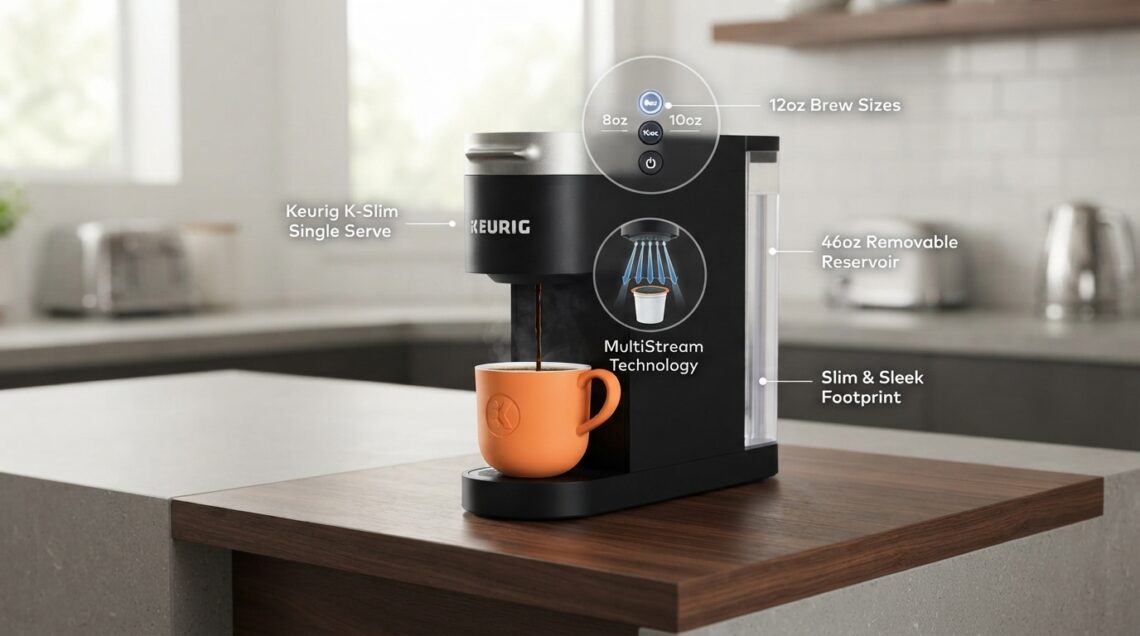
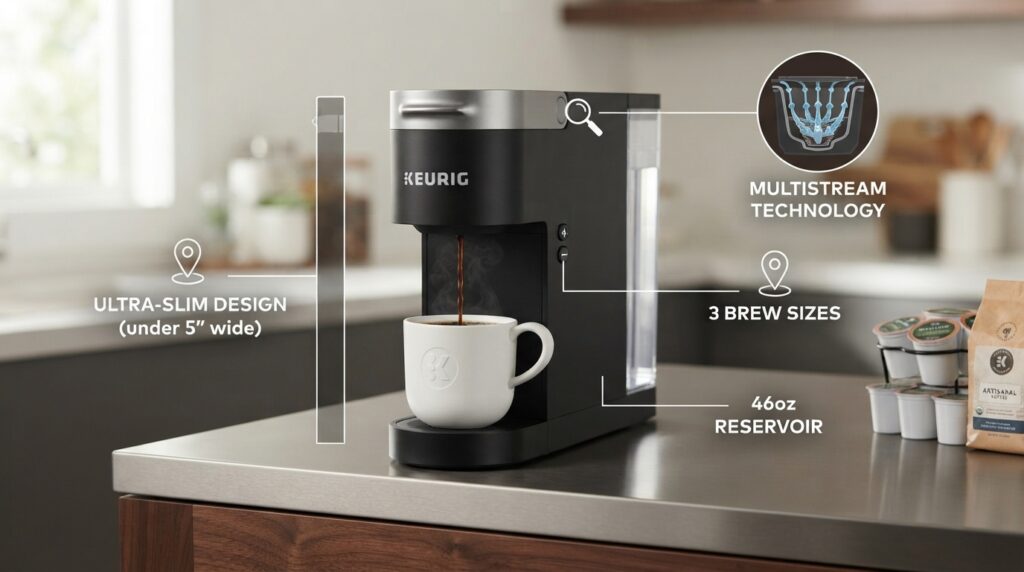
One of the most immediately noticeable aspects of the K-Slim is its physical footprint. With its narrow, vertical profile, this machine occupies significantly less counter space than many alternatives in the single-serve category. For people working with compact kitchens, apartment dwellers, or those setting up coffee stations in offices or dorm rooms, this spatial efficiency can be genuinely practical.
The sleek black finish mentioned in the product name provides a contemporary aesthetic that coordinates with various kitchen styles, from minimalist modern setups to more traditional spaces. Appearance might seem secondary to function, but aesthetics matter when an appliance sits visibly on your counter—you’re more likely to actually use equipment that fits your visual preferences.
The compact design doesn’t mean sacrificing water capacity. The 46-ounce removable reservoir holds a reasonable volume of water, enough for multiple consecutive brews without constant refilling. The fact that the reservoir is removable makes filling and cleaning more straightforward than machines where the reservoir is permanently integrated.
The Multistream Technology Component
The term “multistream technology” refers to how water is dispersed over the coffee grounds during brewing. Rather than a single stream of water pouring through the K-Cup, multistream technology distributes water across multiple points, potentially promoting more even saturation of the grounds and more consistent extraction of flavor compounds.
This engineering detail isn’t merely theoretical. When water contacts coffee grounds unevenly—with some grounds oversaturated and others under-extracted—the resulting cup can taste either too strong or too weak, or display an odd balance of bitter and sour notes. More even distribution helps produce a more balanced cup. Whether this produces a noticeable difference to your palate depends on individual sensitivity to subtle flavor variations, but the technology represents genuine engineering rather than superficial marketing.
Three Brewing Size Options
The K-Slim offers three cup size selections, typically ranging from smaller volumes around 6 ounces up to larger sizes around 12 ounces, with a medium option in between. This flexibility addresses different drinking situations: a smaller cup for espresso-style shots that can be used as a base for milk-based drinks, a medium option for standard coffee cups, and a larger size for those who prefer more volume in their morning mug.
Different brewing sizes also affect concentration and flavor profile. A larger volume of water through the same K-Cup grounds produces a milder, more dilute cup, while smaller volumes create something stronger and more concentrated. Having options lets you adjust to your preferences or to different circumstances—perhaps a smaller, stronger brew when you’re particularly tired, and a larger, lighter cup when you’re simply enjoying the ritual.
Mechanics of Operation
The K-Slim operates through a straightforward sequence. Water fills the reservoir, then you insert a K-Cup into the designated chamber, close the lid, and select your preferred brew size using the interface buttons. The machine heats the water to an appropriate temperature, punctures the K-Cup, and forces the heated water through the grounds into your waiting mug.
This process happens relatively quickly—most K-Slim cycles complete within a couple of minutes from button press to finished cup. There’s minimal waiting compared to traditional drip coffee makers, though not instantaneous like some heavily promoted espresso-style alternatives.
The removable reservoir makes the filling process more convenient than dealing with a built-in water tank on many countertop appliances. You can fill it at your sink and reinsert it without awkward angling or reaching. The machine includes a drip tray to catch small amounts of water or coffee that might escape during brewing.
Practical Applications and Use Cases
Morning Routines
For individuals living alone or in households where people prefer coffee at different times, the ability to brew single cups on demand eliminates a common frustration: arriving at the kitchen to discover cold, several-hours-old coffee in a traditional pot. With the K-Slim, you brew fresh whenever you want, taking just a couple of minutes.
Families with differing coffee preferences benefit as well. One person might prefer a small, strong cup with their breakfast; another wants a larger, milder cup mid-morning; someone else might want tea using a compatible pod. Rather than managing multiple appliances or compromising on preferences, everyone gets what they actually want to drink.
Office and Workplace Settings
The compact size makes the K-Slim practical for office break rooms, small work-from-home spaces, or shared kitchen areas where floor space is limited. In these environments, a single-serve brewer often suits the rhythm of work better than a full pot that might sit and grow stale while people focus on tasks.
Hospitality and Guest Situations
Having the ability to offer guests a fresh cup of coffee or tea, brewed to their specifications, represents a hospitality advantage. The variety of available K-Cup options means you can offer different preferences without needing specialized knowledge of individual tastes.
Who Might Benefit From This Approach
Space-Conscious Households
Anyone dealing with limited kitchen counter space—apartment dwellers, those in RVs or tiny homes, or people with particularly full kitchen layouts—will appreciate the minimal footprint. The K-Slim doesn’t demand sacrificing a large area of counter real estate.
People Who Drink Coffee Inconsistently
Households where coffee consumption varies—perhaps some people drink it daily while others have it occasionally—aren’t ideal candidates for large traditional coffee makers. The single-serve approach eliminates waste from unused coffee sitting in a pot.
Individuals With Specific Preferences
If you live alone or with someone whose coffee preferences differ significantly from yours, single-serve brewing accommodates individual customization without compromise. One person can make their preferred strength and volume while another prepares something entirely different moments later.
Health-Conscious or Dietary-Restricted Drinkers
The pod-based system means pre-measured coffee and controlled consistency, which some people prefer. Additionally, the availability of specialty K-Cups—organic, fair-trade, single-origin, or decaffeinated varieties—allows people with specific dietary interests or values to find suitable options relatively easily.
Important Considerations and Realistic Assessment
The Ongoing Cost of Pods
While a K-Slim itself involves a one-time equipment cost, the ongoing operational expenses warrant honest consideration. K-Cups represent a convenience premium over bulk coffee. When calculated on a per-cup basis, single-use pods typically cost more than buying whole beans or ground coffee in larger quantities. For someone brewing daily, this differential accumulates meaningfully over months and years.
Various manufacturers produce K-Cup alternatives, including reusable options, which can mitigate some of this expense. However, the experience and convenience level differs between using single-use pods and managing reusable cups that require more frequent cleaning and maintenance.
Environmental Impact
Single-use K-Cups present an environmental concern that deserves acknowledgment. While convenient, these pods represent waste—plastic or aluminum containers that, while sometimes recyclable, often end up in landfills. The environmental footprint of single-use pods exceeds that of bulk coffee preparation, even accounting for the packaging used in larger coffee purchases.
Those prioritizing environmental considerations should either investigate recycling options available in their area or explore reusable K-Cup alternatives, accepting that these require more hands-on involvement than simply inserting and discarding pre-packaged pods.
Water Quality and Maintenance
Water quality affects the taste of brewed coffee more than many people realize. If your tap water contains significant mineral content, odors, or off-flavors, these will transfer into your coffee. Some people using machines like this discover they need to use filtered or bottled water to achieve acceptable results.
Regular maintenance—descaling the machine periodically to prevent mineral buildup—becomes necessary to maintain performance and longevity, particularly in hard water areas. The specific maintenance requirements should be reviewed in product documentation.
Pod Availability and Selection
While K-Cups are widely available through major retailers, online platforms, and subscription services, your access to specific varieties depends on your location and shipping capabilities. Those in remote areas might find limited selection compared to urban centers. Additionally, specialty pods or particularly fresh options might require mail-order convenience.
Flavor Expectations
Single-serve pod-based brewing doesn’t produce the same cup profile as other methods, such as pour-over, French press, or espresso machines. The compromise inherent in pre-packaged pods—optimization for shelf stability, consistent results, and convenient preparation—means the flavor experience differs from freshly ground coffee prepared using more hands-on methods.
This isn’t necessarily a disadvantage—many people prefer the consistency and convenience trade-off. However, those accustomed to specialty coffee preparation techniques might find single-serve brewing underwhelming by comparison.
Comparing Single-Serve Brewing to Other Methods
Single-Serve Pods Versus Traditional Drip Coffee Makers
Traditional drip coffee makers brew larger volumes at a lower per-cup cost. They suit households where multiple people drink coffee at similar times. Single-serve systems excel for varied consumption patterns. Drip makers require less ongoing pod purchasing, while single-serve options offer flexibility and freshness on demand. The choice depends on whether your household prioritizes economy or customization.
Single-Serve Systems Versus Manual Brewing Methods
Pour-over, French press, and similar methods offer more control over brewing variables—water temperature, contact time, and extraction characteristics. These approaches appeal to enthusiasts prioritizing flavor control. They require more active participation and produce more cleanup. Single-serve machines prioritize convenience at the cost of that control. Neither approach is objectively superior; they optimize for different values.
Single-Serve Pods Versus Espresso-Based Machines
True espresso machines and their simplified versions produce a different beverage category than K-Cup brewers. Espresso involves pressurized extraction and creates a smaller, more concentrated shot often used as a base for milk-based drinks. K-Cup brewers produce regular-strength coffee, not espresso. Espresso machines demand more technique and maintenance; pod-based brewers minimize both while sacrificing that capability. The comparison only matters if you specifically want espresso-style beverages.
Frequently Asked Questions
How long does brewing actually take? From button press to finished cup typically takes two to three minutes, accounting for heating time and extraction. This is faster than traditional drip makers but not instantaneous. Most users find the time acceptable for the convenience trade-off.
Can you use generic K-Cups instead of brand-specific ones? The K-Cup system has become standardized enough that many third-party manufacturers produce compatible pods. Generally, yes—you can use generic or alternative brand pods. However, compatibility and quality vary, so some trial and error might be involved in finding options you prefer.
What about making larger quantities for multiple people at once? The single-serve design inherently brews one cup at a time. If you need coffee for several people simultaneously, you’ll need to brew multiple cups sequentially or consider a traditional coffee maker as an alternative.
How often does the machine need cleaning and maintenance? Regular cleaning of the water reservoir and drip tray prevents mold and mineral accumulation. Periodically descaling (typically every 3-6 months, depending on water hardness) removes mineral buildup that can affect performance. Specific intervals are provided in the product manual.
What’s the difference between 6-ounce, 10-ounce, and 12-ounce brew sizes? These sizes refer to the volume of water passed through the K-Cup. Smaller sizes produce more concentrated coffee; larger sizes produce milder, more diluted results. Your preference depends on how strong you like your coffee and the size of your drinking vessel.
Do reusable K-Cups work with this machine? Reusable K-Cup alternatives do work with the K-Slim, allowing you to use your own ground coffee and reduce waste. However, they require more manual involvement—filling, tamping (if needed), and post-brew cleaning. The convenience reduction is the trade-off for cost and environmental benefits.
Can you brew tea or other beverages? Yes, many pod-based systems work with K-Cup compatible tea and hot cocoa pods. The machine simply heats water and passes it through the pod, so any pre-packaged beverage in that format can theoretically be used. Quality and satisfaction with non-coffee beverages varies by product.
How much counter space does it actually need? The K-Slim’s footprint is roughly 5 inches wide by 12 inches deep by about 10-11 inches tall, though exact dimensions should be verified. This represents significantly less space than traditional drip makers but still requires a dedicated spot for the reservoir, brewing area, and cup placement.
What happens if you don’t use it regularly? Like any appliance with a water reservoir, sitting unused for extended periods can lead to stagnant water issues. If the machine will remain unused for weeks or months, emptying the reservoir and allowing it to dry prevents problems.
Conclusion
The Keurig K-Slim represents one particular solution to the question of how to brew coffee conveniently in limited space. Its slim profile, straightforward operation, and three-size brewing flexibility make it suitable for specific situations: individuals in compact living spaces, households with varied coffee preferences, and anyone who values the convenience of single-serve brewing.
Like any appliance, it involves trade-offs. The ongoing cost of K-Cups exceeds bulk coffee purchasing, environmental concerns about single-use pods deserve acknowledgment, and the flavor experience differs from more hands-on brewing methods. Whether these trade-offs matter depends on your priorities.
If you value space efficiency, prefer brewing fresh coffee on individual schedules, and appreciate the simplicity of single-serve preparation, this approach warrants consideration. If you prioritize cost economy, environmental minimization, or maximum flavor control, alternative brewing methods might better suit your situation.
The decision ultimately reflects your lifestyle, kitchen circumstances, coffee consumption patterns, and personal priorities. Honest consideration of both advantages and limitations allows you to determine whether this equipment aligns with your actual needs rather than simply responding to marketing appeal.